
Inverters offer many benefits over traditional mechanical drives with fewer moving parts, larger speed ranges,...
Search in blog
Blog categories
Latest posts

What to consider when moving to an Inverter
Read more
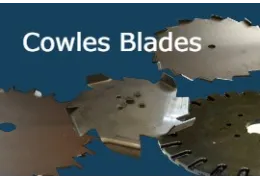
Morehouse Cowles Sunset – DisperseTech Offers Compatible Impeller Blades
Read more
With the sunset of Morehouse Cowles, DisperseTech now offers compatible impeller blades for legacy mixers. Customers...
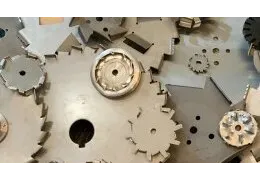
Unleashing the Power of Dispersion Blades: A Comprehensive Guide to Enhanced Mixing Efficiency
Read more
In the dynamic world of mixing processes, the efficiency of your equipment can make or break your operations. Enter...
Popular posts

Properties of Common Solvents
Density, boiling point, evaporation rate, and flash point of common solvents
Read more

Tip Speed Definition and Formula
Blade Speed (tip speed), measures how far a point on the outer most edge of the disperser blade travels in a given...
Read more

CLEARANCE HOLE CHART
Clearance hole chart for inch bolts and screws according to ASME B18.2.8
Read more

Paint Formulation
Paint consists of four basic components:
Resin
Pigment
Solvent
Additives
The performance of a coating is influenced...
Read more

Viscosity Conversion
Viscosity Conversion table comparing some of the typical viscosity scales used in Paint and Coatings including:...
Read more
Latest comments
-
 Blade to mix sand into paintUsed to have a Teflon on plastic blade need one for my...
-
cpvc and paint mix formulavery good excellent OK
-
Paint Formulation for my startupI would like you to share with me paint formula with...
-
Formula applicationThanks so much for formulation offered but I wish it be...
-
FormulationNeed all types of paint formulations
Featured posts
Morehouse Cowles Sunset – DisperseTech Offers Compatible Impeller Blades
With the sunset of Morehouse Cowles, DisperseTech now offers compatible impeller blades for legacy mixers. Customers...
Read more
Unleashing the Power of Dispersion Blades: A Comprehensive Guide to Enhanced Mixing Efficiency
In the dynamic world of mixing processes, the efficiency of your equipment can make or break your operations. Enter...
Read more

CLEARANCE HOLE CHART
Clearance hole chart for inch bolts and screws according to ASME B18.2.8
Read more
Blog tags
No featured images
Archived posts
Top authors


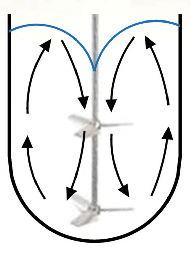
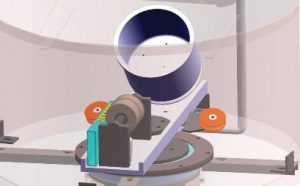 Figure 2: Interior of a Dual-Axis Centrifugal Mixer
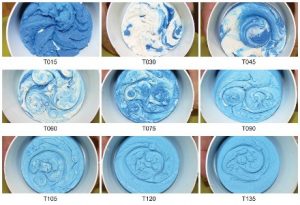 Figure 3: Surface Flow Pattern[/caption]
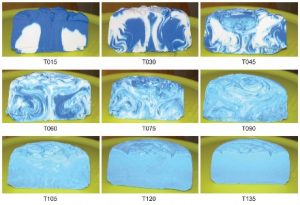 Figure 4: Internal Flow Pattern[/caption] After T015 (15 seconds), the blue material, which was originally at the bottom of the container, has traveled up the wall of the vessel, across the top, and down the center of the product. By T030 (30 seconds), a mixture of blue and white material follows a similar path. This mixing continues until T135 (2 minutes, 15 seconds) when a uniform product is produced.
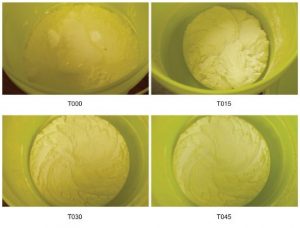 Figure 5: Powder, Paste and Liquid Mixing[/caption] The dual-axis centrifugal mixer produces the axial flow patterns that are predominant in liquid mixing while overcoming the viscosity limitations of a traditional single-shaft mixer. Added benefits include reduced cleanup requirements, as all shafts are eliminated and the container remains the only contact part. Without shafts, it is possible to produce very small batches; standard units are capable of mixing batches as small as 50 grams and as large as 2,500 grams. (These batch limits can be extended with container adapters.) In addition, the shallow vortex eliminates additional air entrainment during mixing. As vortex depth is not a limiting factor, the dual-axis centrifugal mixer can mix at high energy levels, which results in shorter batch times. In the adhesive and sealant industry, the mixer has been used for fast and efficient formulation qualification, pilot development, and small batch production.